Buyer's guide
Spinel: A Buyer's Guide
June 2, 2026
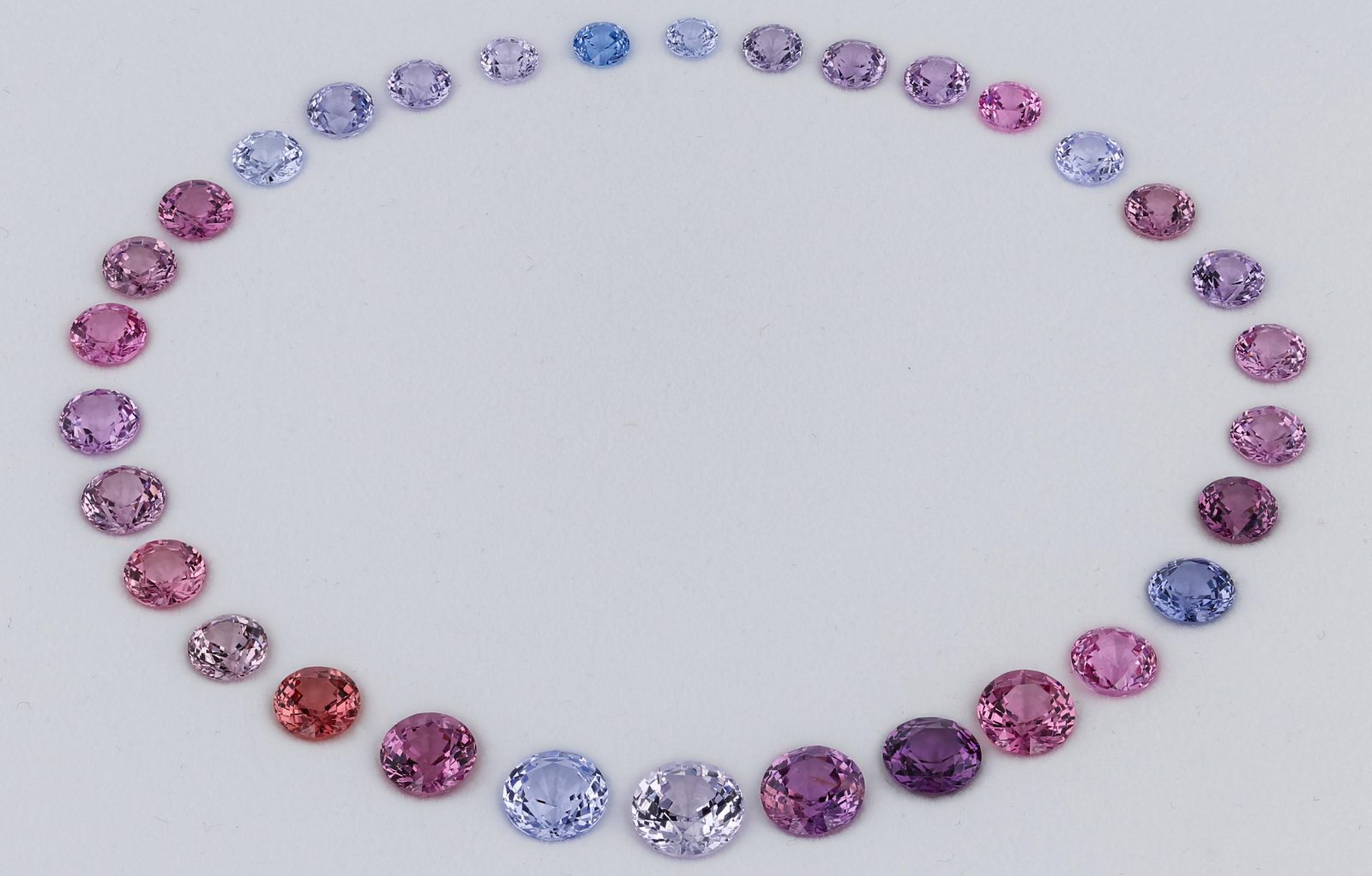
For centuries the great rubies of royal treasuries were actually spinel. The Black Prince's Ruby in the British Imperial State Crown is a roughly 170 carat red spinel, and the Timur Ruby beside it, carved with the names of Persian emperors, weighs over 350 carats. The old trade called these stones balas rubies, after the Badakhshan mines of Central Asia, and spinel was only recognised as its own mineral in the 1800s. It remains the gem world's best kept secret: a hard, brilliant stone that is almost never treated, in colours that rival ruby and fine sapphire at a fraction of the price. Once an insider's stone, fine spinel now sees demand outstrip supply.
Why is spinel different?
Three facts shape the buying experience:
- It is singly refractive. Spinel crystallises in the cubic system, so unlike ruby and sapphire there is no pleochroism for the cutter to manage. Its colour reads cleanly and evenly from any angle, which is a large part of its brightness.
- It is almost never treated. Most spinel on the market is completely natural, a genuine rarity among coloured stones. A little pink to red material is heated, and a cobalt diffusion treatment exists that colours only a thin surface layer of blue. Both must be disclosed.
- It grows beside ruby. In the Mogok marble, our home ground, spinel and corundum form together, and in places the spinel is the more plentiful of the two. The finest reds and hot pinks have come out of those same valleys for centuries, along with a collector's treasure: the Star of David macle, a flattened twinned crystal found in Mogok.
The colour range
Spinel's value tracks its colour closely, from most to least valuable:
- Vivid red, the trade's stoplight red, coloured by chromium. The finest are pure red to slightly purplish red, medium to medium dark, vivid and bright.
- Cobalt blue, coloured by a trace of cobalt with little iron. Rare, electric, and far more desirable than ordinary blue. Sri Lanka is the classic source, with Vietnam and Pakistan beside it.
- Hot pink and vivid orange, from chromium and iron together. The neon pinks of Man Sin in Mogok, nicknamed Jedi spinels in the trade, caused a market sensation, and Mahenge in Tanzania answered in 2007 with world class neon pink and red, announced by a single crystal that weighed 52 kilograms.
- Purple and violet, moderate demand.
- Lavender and greyish violet, coloured by iron alone, the least in demand. Most ordinary blue spinel also owes its slightly greyish colour to iron alone, which is why true cobalt blue stands apart.
Colour change and grey star spinels exist too, mostly for collectors.
How is spinel judged and priced?
The same framework as ruby: hue, tone and saturation, judged face up on a neutral background in daylight equivalent light. Spinel's brightness is part of its charm, so look for lively, even colour with no washed out centre.
- Colour leads: vivid red and true cobalt blue at the top, lavender at the bottom.
- Size: spinel is scarce, so most rough is cut in free sizes rather than calibrated ones, and prices climb sharply for fine red, pink and blue stones above about five carats.
- Cut: many crystals grow as flattened twins called macles, so cutters often fashion shallow stones with large tables to save weight. Judge a spinel on its overall beauty and liveliness rather than on textbook proportions.
- Natural and untreated is the baseline, so unlike ruby you are usually not paying an unheated premium. You are simply buying an untreated stone.
The headline remains: a top five carat red spinel sells for a fraction of an equivalent ruby. Comparable fire, honest material, far lower price. That gap is the buyer's opportunity, and it has been closing year by year as the market wakes up.
A note on imitation
Because natural spinel is scarce and synthetic spinel has been mass produced for over a century, often standing in for other gems in birthstone and class ring jewellery, many people have never seen the natural stone. The synthetic was actually invented by accident, by researchers trying to grow synthetic sapphire. A laboratory separates them easily: natural blue spinel is coloured by iron and cobalt together, while the synthetic shows cobalt alone under the spectroscope. The practical lesson: buy natural spinel from a seller who will state plainly, in writing, that it is natural and untreated.
Dos and don'ts
- Do consider spinel as a brilliant, hard, untreated alternative to ruby and sapphire, for far less money.
- Do confirm natural versus synthetic, and any treatment, on a notable stone.
- Do view in daylight and look for bright, even colour.
- Don't confuse red spinel with ruby or pay ruby prices for it. And don't dismiss it either: kings wore it unknowingly for six centuries.
- Don't assume blue spinel is the rare cobalt type. Most blue is the commoner greyish iron blue, and the difference in value is large.
Caring for spinel
At hardness 8 and almost always untreated, spinel is easy to live with and safe for everyday wear. Warm soapy water and a soft brush are all it needs, and because it is rarely fracture filled, it tolerates cleaning far better than emerald or composite rubies.