Buyer's guide
Ruby: A Buyer's Guide
June 2, 2026
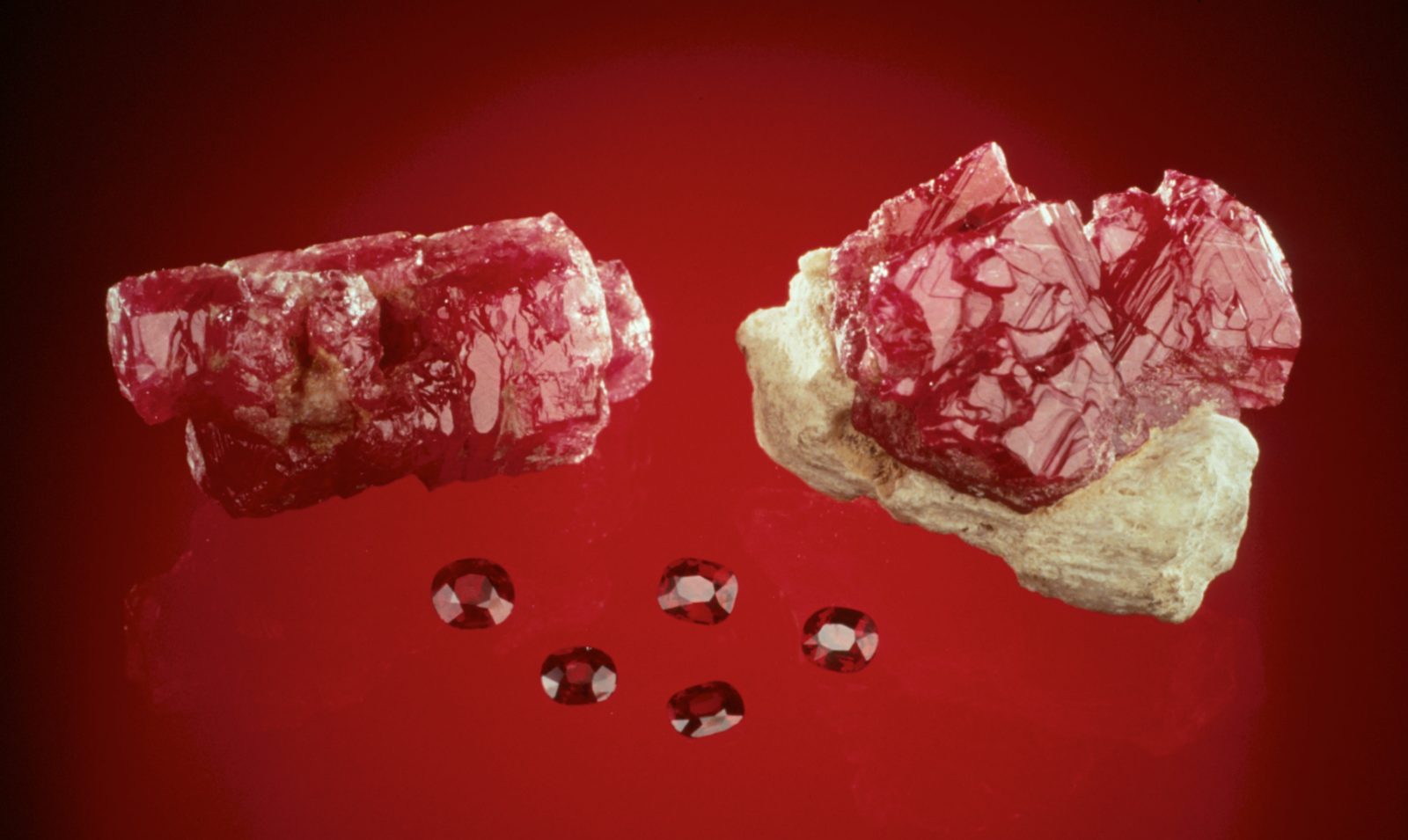
Ruby is the red variety of corundum, the same mineral as sapphire, coloured by chromium, and the most valuable coloured gem per carat in the world. In Sanskrit it was called ratnaraj, king of precious stones. The same chromium that makes ruby red also makes it fluoresce under ultraviolet light, which is why the finest stones seem lit from within. Iron kills that glow, which is a fact worth remembering: it explains most of the difference between a great ruby and an ordinary one. Ruby is hard and tough, 9 on the Mohs scale, so it wears well in everyday jewellery. But two rubies that look alike across a counter can differ in price by a hundred times. Here is what drives that gap.
How is ruby colour judged?
Colour is the single biggest value factor in ruby, and gemmologists break it into three parts:
- Hue: the basic colour and any secondary tint. Ruby runs from slightly orangy red, through pure red, to purplish red.
- Tone: how light or dark the stone is.
- Saturation: how pure and vivid the colour is, versus greyish or brownish. This is where value is won or lost.
The most prized rubies are red to slightly purplish red, medium to medium dark in tone, with vivid saturation. Strong colour that neither goes black nor drifts toward pink. A red corundum that is too light in tone is classed as pink sapphire, not ruby, and the boundary is genuinely subjective: different laboratories draw it in slightly different places.
Judge colour face up, on a neutral white or grey background, under daylight equivalent light. Be wary of shop lighting: incandescent and halogen bulbs are rich in red and flatter any red stone. Always ask to see a ruby in daylight before deciding.
The colour names, and what stands behind them
- Pigeon's blood: the trade's oldest term for the finest red, a vivid, slightly glowing red softened by fine silk inclusions. The standard was set by Mogok, and today the major laboratories put the term on reports only when a stone matches carefully chosen master stones, so on paper it now means something verifiable.
- Crimson: a rich, slightly purplish red. Scarlet: red with a faint hint of orange. The labs added these as fine rubies with different characters, mostly African, entered the market.
The geology behind the colours:
- Marble hosted rubies (Mogok in Myanmar, parts of Vietnam, Afghanistan, Tajikistan) are low in iron: pure red, strongly fluorescent, the classic look. In Mogok the gem gravels are called byon, and the valley floors have been worked for centuries.
- Basalt hosted rubies (Thailand, Cambodia) are high in iron: darker, brownish, with little glow and no silk, so they can read too dark.
- Metasomatic rubies (Mozambique, Tanzania, Kenya and neighbours) vary in iron and now supply most of the world's ruby. Montepuez in Mozambique is the single most important source on earth today, and its stones often carry distinctive green amphibole inclusions. Africa has replaced Southeast Asia as the engine of supply, while Thailand remains the great cutting and treatment hub.
How price is structured
Roughly in order of impact:
- Colour: vivid, medium toned red sits at the top. Brownish, dark or pinkish stones fall away fast.
- Treatment: untreated stones command large premiums. Intact silk inside a ruby is prized for a quiet reason: it proves the stone was never cooked, because heat dissolves silk. It also scatters light across facets that would otherwise go dark, spreading the colour softly. That is part of the Mogok magic.
- Clarity and transparency: ruby is expected to carry inclusions, so it need not be flawless. What matters is that they do not cloud the stone or sit obviously under the table.
- Size: fine rubies above one carat are genuinely rare, so price per carat rises steeply with size.
- Origin: an untreated stone with a laboratory report tying it to a classic source, above all Mogok, can cost many times an equal looking stone from elsewhere. The record tells the story: the 25.59 carat Sunrise Ruby, Burmese and unheated, sold for 30.3 million dollars in 2015, still the benchmark for coloured stones at auction. Never pay an origin premium without a report from a reputable laboratory.
This is why a one carat ruby is a meaningless price. The same weight spans commercial stones and museum stones.
Treatments, and what to ask
Heat treatment is almost universal and accepted. It ranges from gentle to transformative: low temperature heating makes subtle improvements and is nearly impossible to detect, while high temperature heating can dissolve silk entirely and leave telltale stress halos around inclusions that a laboratory will spot. Untreated is worth the most, then heated, with aggressive treatments worth far less:
- Lead glass filling, the composite ruby: heavily fractured, near opaque material flooded with leaded glass to look transparent. It shows a telltale blue to orange flash under light, and it is fragile: ordinary acids, heat, even a jeweller's torch can ruin it. This is the single biggest trap for new buyers, because it looks like a bargain.
- Flux healing: fractures sealed during heating as synthetic corundum regrows inside them. Common and disclosed.
- Oiling, dyeing, coatings: ancient tricks still used on low grade material. None are permanent.
What to ask, in plain words: is it natural ruby? Has it been heated? Is it glass filled or a composite? Is there a report? A reputable seller answers all four without flinching.
One more thing worth knowing: ruby was the first gem ever synthesised. So called Geneva rubies appeared in 1885, and Verneuil published his flame fusion process in 1904. Synthetic ruby is everywhere, from estate jewellery to the crystal at the heart of the first laser ever built. And for centuries before that, the great red impostor was spinel: the Black Prince's Ruby in the British Imperial State Crown is one. Only a laboratory settles the question.
Dos and don'ts
- Do view a ruby in daylight, not just under shop spotlights.
- Do get an independent laboratory report for any significant purchase. It confirms natural versus synthetic, and treatment.
- Do accept some inclusions. An eye clean ruby is rare, and you pay dearly for it.
- Don't buy pigeon's blood or Burmese on the word alone. Words are free. Reports are not.
- Don't assume a cheap ruby is a deal. A suspiciously low price usually means a glass filled composite, a synthetic, or another red stone entirely.
- Don't ultrasonically clean a filled or fracture prone ruby. Warm soapy water and a soft brush are safest.
Caring for ruby
As corundum, ruby is hard and tough, excellent for daily wear. Untreated and heat only stones tolerate normal cleaning. If a stone is glass filled, oiled or fracture filled, keep it away from heat, ultrasonic and steam cleaners, and acids. When in doubt, clean gently with warm soapy water and a soft brush.