Buyer's guide
Emerald: A Buyer's Guide
June 1, 2026
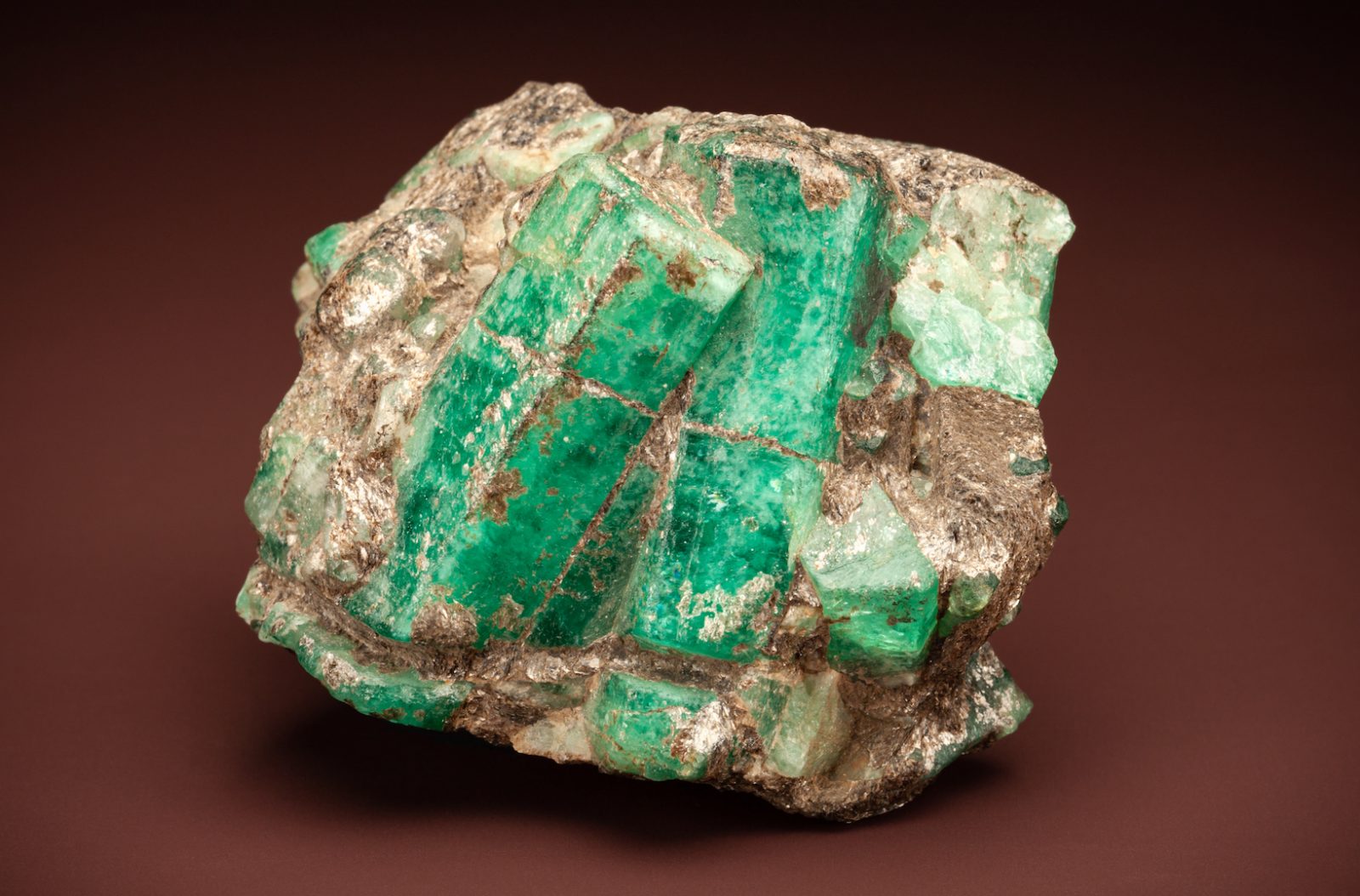
Emerald is the green variety of beryl, the same mineral family as aquamarine and morganite. What turns colourless beryl into emerald is a trace of chromium or vanadium, the elements that give the stone its unmistakable deep green. Alongside ruby and sapphire, emerald is one of the trade's big three coloured gems, and people have loved it a very long time: Egypt was mining emerald by 3500 BC, the Incas guarded their sources with their lives, and the Mogul emperors of India carved prayers into stones the size of a palm.
There is a threshold, too: beryl has to be a properly saturated green to earn the name emerald. Anything paler or weaker is just green beryl, and worth a fraction as much.
The colour to chase
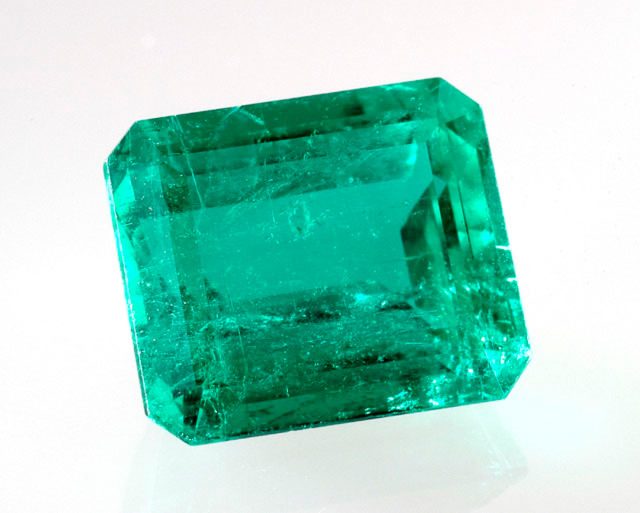
The finest emerald is a slightly bluish green, medium to medium dark in tone, with strong, vivid saturation. Rich but not so dark it goes sleepy. Even colour across the stone, high transparency, and no obvious colour zoning are what separate a great emerald from a merely good one. Iron is the quiet variable: more iron pushes the green bluer, less iron leaves it purer.
Emerald is dichroic, showing bluish green one way and yellowish green the other, so a good cutter orients the stone to put the finer bluish green face up.
Two classic origins anchor the market:
- Colombia: the historic benchmark, from the legendary Muzo, Chivor and Coscuez mines, where emerald forms in hydrothermal veins in sedimentary rock, unlike anywhere else that matters. Muzo is famed for vivid pure green, Chivor for a cleaner, slightly bluer stone. Government surveys suggest only a fifth of Colombia's deposits have ever been worked.
- Zambia: the world's second source and Africa's most important, led by the Kagem mine, which alone produces roughly a fifth of the world's emeralds. Zambian stones run slightly darker and more bluish from higher iron, often with better clarity, and are frequently the smarter value.
Afghanistan's Panjshir Valley can produce stones that rival the world's best, and the old Sandawana mine in Zimbabwe was famous for intense green in stones barely a millimetre across.
The jardin: why inclusions are part of the deal
Here is what surprises most first time emerald buyers: emeralds are almost always included, and the trade accepts it. The web of inclusions inside an emerald is so characteristic it has a name, the jardin, French for garden, because it can look like tiny foliage suspended in green.
In almost any other gem, eye visible inclusions hurt value. In emerald they are tolerated even in fine stones, and they carry information. Three phase inclusions, a bubble of gas and a crystal sitting together in a pocket of liquid, point to Colombian origin. Synthetic emeralds show simpler two phase inclusions, which is one of the ways a laboratory catches them. The rarest Colombian stones show a roiled, honeyed softness called the oil drop effect that collectors prize, and a few grow with dark spokes radiating from the centre, the trapiche emerald, cut as cabochons and loved for their strangeness.
The flip side of the garden: all that internal structure makes emerald brittle despite its decent hardness, so it needs care in setting and wear.
Why nearly every emerald is oiled
Because emeralds are so fractured, well over ninety percent are treated to make surface reaching cracks less visible. A filler with a refractive index close to emerald's flows into the fractures and they all but disappear to the eye.
- Oil: the classic treatment, and an ancient one. Cedarwood oil has been used since Egyptian and Roman times because its refractive index sits close to emerald's. Oil is not permanent: it can dry, seep or discolour, but it can also be cleaned out and replaced, which is why the trade forgives it. One warning: filler sold as palm oil is actually a resin that can break down within months and leave whitish residue. Many dealers refuse stones treated with it.
- Resin: modern polymers are more stable and resist solvents better. But when a hardener is added the filler can become impossible to remove, and that permanence cuts value rather than adding it. When filling becomes extensive enough, the stone is honestly described as a composite of emerald and resin.
- Green dye added to a filler to fake colour is considered unacceptable, full stop.
Laboratories grade the degree of enhancement as none, minor, moderate or significant, and disclose it. This is not a scandal, it is the norm, and it directly affects price: an emerald graded none is rare and commands a strong premium, while significant enhancement is masking heavy fracturing. It became the norm openly for a reason: an undisclosed resin scandal in the 1990s forced the industry into today's disclosure standards. Under magnification, filled fractures sometimes give themselves away with a blue to orange flash as the stone is rocked.
Why emeralds are cut the way they are
That rectangular step cut with the clipped corners, the emerald cut, was invented for this stone. The brittle, included material is prone to chipping at sharp points, so the truncated corners protect it during cutting and wear, while the long, calm facets show the colour beautifully. Cutting emerald well is its own career: the saying in the trade is ten years to learn it, twenty to master it, because the cutter is juggling dichroism, colour zoning that hugs the surface of the rough, and fractures all at once.
What to check before you buy
- Colour first, always: saturated, even green, judged in daylight.
- Get the enhancement grade in writing: none, minor, moderate or significant tells you how much fracturing is being hidden, and ask what the filler is.
- Expect a jardin: some inclusion is normal and proves it is natural. What matters is whether it threatens durability or kills transparency.
- Origin adds a premium: documented Colombian origin carries one, but a gorgeous Zambian stone is often the smarter buy.
- Watch for impostors: glass, dyed quartz, synthetic spinel triplets and hydrothermal synthetic emerald all circulate. A laboratory report settles it.
Caring for emerald
Emerald asks more of its owner than corundum does:
- Never clean it in an ultrasonic or steam cleaner. Vibration stresses the fractures and steam sweats the filler out. Warm soapy water and a gentle touch are all it needs.
- Keep it away from strong heat, solvents and household cleaners, all of which attack fillers.
- Store it on its own, not wrapped in cotton, which slowly absorbs oil, and not sealed airtight, which draws moisture and filler out.
- Tell any bench jeweller it is emerald before work begins. A torch can burn the filler into a brown film.
A last honest note from us: our own trade is corundum and spinel, the stones of our home ground in Burma. We do not keep emerald in stock, but we source it on request through the same standards described here. Emerald rewards the buyer who understands it: the garden inside is not a flaw to fear, it is the fingerprint of a five thousand year old treasure.